
Our Blog
Explore insights, strategies, and thought leadership from the experts at Prospere Companies. Our blog covers the latest trends in business sales, M&A, commercial real estate, and exit planning, designed to help entrepreneurs and investors make smarter decisions.

Transworld Prospere Named to the Inc. 5000 List for Eighth Year
Transworld Prospere has been named to the 2026 Inc. 5000 for the eighth time, recognizing its continued growth and commitment to helping business owners maximize the value of what they’ve built. With more than 2,000 businesses sold and a growing presence across Colorado, Texas, and Nevada, this milestone reflects more than a decade of serving entrepreneurs through some of their most important business decisions.
SOUTHLAKE, Texas (August 11, 2026) – Transworld Prospere, the #1 Transworld Business Advisors team from the World's Largest Business Brokerage, announced today it has been recognized on the 2026 Inc. 5000 list for the eighth time. The integrated business services firm ranked #52 of all Dallas-Fort Worth businesses on the list and earned the highest growth record among brokerage firms in the country. The list is the most prestigious ranking of the nation’s most successful independent and entrepreneurial businesses, recognizing companies that have achieved remarkable growth while driving innovation, creating jobs, and shaping the future of the economy.
The eighth Inc. 5000 recognition reflects Transworld Prospere's sustained growth across its regional markets in Colorado, Dallas-Fort Worth, Austin, Waco, and Las Vegas, with strong momentum in North Texas leading to the company's headquarters relocation to Southlake earlier this year. Transworld Prospere has maintained its position as the top-performing team globally within the network for 10 consecutive years and has spent more than 13 years helping business owners navigate some of the most important financial decisions of their lives. Today, Transworld Prospere employs more than 110 people and has sold more than 2,000 businesses since its founding in 2012.
"Eight times on the Inc. 5000 reflects the consistency our brokers, consultants, and real estate agents deliver for business owners every single day," said Al Fialkovich, CEO and co-founder of Transworld Prospere. "This recognition is about the trust entrepreneurs place in us with the most important financial decisions of their lives. Our team's growth comes from helping business owners maximize what they've built, and we're incredibly proud of that."
Transworld Prospere's growth is rooted in its unique approach to putting business owners' best interests first. Unlike traditional brokers who only handle the sale, Transworld Prospere is the only integrated business services firm offering business brokerage, commercial real estate, and growth consulting all under one roof, creating a seamless, full-service experience that maximizes value at every step. By working with one trusted team instead of juggling multiple advisors, owners get better outcomes. Transworld Prospere helps businesses sell successfully and talks to more than 1,500 buyers each week, with close rates six times the national average.
“Our growth is built on investing in the communities where we live and work," Fialkovich said. "Whether it's Colorado, Texas, or Nevada, we work alongside ambitious entrepreneurs who strengthen their local economies every day. Being named to the Inc. 5000 eight times motivates us to keep helping business owners get more of what they deserve. Our success is another business owner’s miracle.”
To learn more about Transworld Prospere and its family of companies, visit Transworld Prospere.
About Transworld Prospere
Transworld Prospere is the #1 Transworld Business Advisors team globally for 10 consecutive years, helping business owners transition successfully across Colorado, Dallas-Fort Worth, Austin-Waco, and Las Vegas-Henderson. Backed by the World's Largest Business Brokerage, Transworld Prospere is part of the Prospere Companies family, which offers exit planning, business sales, mergers and acquisitions (M&A), and commercial real estate (CRE) services. Built by entrepreneurs for entrepreneurs, the integrated team delivers guidance tailored to each owner's goals at every stage of ownership. Transworld Prospere serves business owners seeking to increase business value, plan their exit, sell their business, or find the right commercial real estate solution, helping clients protect what they've built, maximize value, and move confidently toward their next chapter. Repeatedly named to the Inc. 5000 and Financial Times Fastest Growing Companies lists, Transworld Prospere combines proven expertise with a track record of excellence. For more information, visit tworld.com/prospere or connect with a local Transworld Prospere business broker.
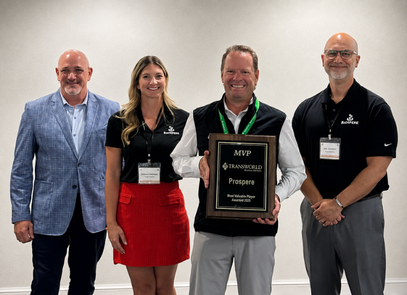
Transworld Prospere Achieves Tenth Straight MVP Award for Global Business Sales Success
read moreSOUTHLAKE, TX. (July 29, 2026) – Transworld Prospere has been named Top Performing Office across Transworld Business Advisors' global network of over 250 offices, earning the prestigious MVP Award from the World's Largest Business Brokerage for an unprecedented tenth consecutive year. The award was presented at the company's annual franchise conference in recognition of the firm's continued excellence in helping business owners achieve successful exits.
The MVP Award caps another milestone year for Transworld Prospere. In 2025 alone, the firm surpassed 2,000 businesses sold in the last ten years. That track record translates to something critically important for business owners: proven expertise in navigating the complex, high-stakes process of selling a business.
For entrepreneurs throughout Colorado, Dallas-Fort Worth, Austin, Waco, and Las Vegas looking to sell their businesses, the distinction carries significant weight. Transworld Prospere maintains a closing rate six times higher than the national average, meaning business owners who engage the firm are substantially more likely to complete a successful sale than those who work with typical brokers.
“This recognition reflects the dedication of our entire team and, most importantly, the trust our clients place in us,” said Al Fialkovich, Chief Executive Officer of Transworld Prospere. "Selling a business is often the largest financial transaction of a business owner's life. Our job is to maximize value, minimize risk, and ensure owners can move forward successfully with confidence."
The firm’s success stems from the integrated approach offered through Prospere Companies. Through its family of businesses, including Transworld Prospere, Transworld CRE Prospere, and Exit Factor Prospere, business owners have access to specialized expertise throughout every stage of ownership. Whether preparing a company for valuation growth, planning an exit strategy, selling the business, or identifying the right commercial real estate solution, clients receive coordinated guidance aligned with their long-term goals.
Founded by entrepreneurs and staffed by former business owners, Transworld Prospere has built a team of business brokers who understand firsthand what's at stake when selling a company. They recognize that exiting a business isn't simply a transaction; it's a deeply personal decision involving years of sacrifice, relationships with employees and customers, and the legacy an owner leaves behind.
This combination of professional expertise and personal experience drives results. Transworld Prospere's team is four times larger than the next biggest office in the network, and maintains the highest performance standards. In addition to the MVP Award, 44 Transworld Prospere brokers earned President's Club honors, the organization's premier recognition for the highest-performing individual business brokers worldwide.
As market conditions continue to evolve with interest rates, succession planning pressures, and changing buyer expectations reshaping the business sale landscape, business owners throughout Colorado, Texas, and Nevada face increasingly complex exit decisions. Transworld Prospere's decade-long track record as the top-performing office globally positions the firm as a critical resource for owners navigating these challenges.
"We've been in our clients' shoes," added Fialkovich. "We know the sleepless nights, the tough decisions, and what it takes to build a valuable business. Achieving this milestone for a tenth straight year proves that perspective matters when guiding owners through what comes next."

Did you know that 33% of employees in an acquired companies leave within the first year after a sale? That’s almost three times the normal attrition rate of traditional hires. https://mitsloan.mit.edu/ideas-made-to-matter/your-acquired-hires-are-leaving-heres-why
These aren’t just statistics to digest, they’re warnings to take heed of. Without prepping your management team for a smooth exit following a sale of your business, the company you spent your blood, sweat and tears building will be at a higher risk of failure.
In this guide, we’ll walk you through an example management prep timeline that will give your team the best chance of success post-exit. Whether you're planning to sell your business in the next year or five, starting now is the difference between a smooth exit and mountains of problems.
Why Management Readiness Is a Key Predictor of Exit Success
When buyers look at your business, they aren’t just looking to purchase your revenue, they’re buying your team’s ability to sustain and grow that revenue over the following 3-5 years.
To give buyers more confidence in your team’s ability, you need to provide a management transition plan. That includes documenting key roles, responsibilities and standard operating procedures as well as providing a plan to keep key talent on through transition, a transition plan for you to help the new owners with the management team post-sale and a plan for continuity with real estate and any other assets your company owns.
Once these steps are complete, buyers will have much more confidence in the businesses ability to remain profitable and grow in their first years of ownership.
The Hidden Cost of Owner-Dependent Operations
One of the biggest red-flags for buyers when searching for businesses to invest in is an owner-dependent operation. Reports consistently show higher EBITDA multiples for companies with structured management teams compared to those that are mostly owner reliant. Further, 62% of mid-market deals see price cuts when the owner is the sole knowledge holder.
To avoid this “key person risk,” you need to build out a management team if you don’t have one and prepare them with as much internal knowledge as possible through documentation on key roles, responsibilities and standard operating procedures. Without a team who can prove they understand these parts of the business, you’re likely leaving a large amount in valuation on the table.
Preparing for How Buyers Evaluate Your Team
Buyers use a standardized management scorecard during due diligence, which you can prepare your management team for. Here’s what you need to look out for:
- Org chart clarity – Reviewing business structure is critical for buyers and shows that your team is laid out in the most efficient way possible. This is your chance to organize your company in the most impressive way for new owners.
- Retention incentives – Since more than 33% of talent leaves within the first year after a sale, you need to come up with a plan to keep key talent on board. One strategy is significant bonuses paid 12 months after close.
- Non-compete strength – Retaining key management pieces is critical for sustained success, so consider writing 2-3 year non-competes and non-solicits for revenue-critical roles.
- Cultural fit scoring – Prepare your team with a unified vision of the business post-sale. How can they fit into that vision and communicate that clearly with potential buyers?
Your Management Prep Timeline
If you are looking for a timeline on how to sell your business, the below outline will give you a quick look into the key moments and checkpoints within a 12-24 management prep timeline (remember, this is just an example, not a hard and fast rule).
- Assessment (First 2-4 months) – Take time to assess your company’s structure, do a leadership audit to make sure all key roles are filled and create a succession gap map, which shows the weak points of your business structure and how the new owners can prepare to build those areas up in the transition period.
- Role Clarity (Next 2-4 months) – Look at all key jobs and update their descriptions and responsibilities to make sure all areas of your business are covered. Create KPI dashboards that show what metrics are most important for your business and track them so the new ownership can know where to look for signs of business health.
- Incentive Lock-In (Next 2-4 months) – Create stay bonuses for key members of the team, create phantom equity (which gives employees a cash bonus tied to the company’s stock performance without giving any ownership of the company away) or offer any other kind of “golden handcuff” agreement that incentivizes key members to stay.
- Knowledge Transfer (Next 3-6 months) Record standard operating procedures (SOP) for key business tasks, prepare key vendors for ownership transfer and shadow management positions to make sure all the work done before has resulted in an efficient structure and process moving forward.
- Buyer Rehearsal (Last 3-6 months) Get ready for buyers by doing mock Q&As, compiling as much data as possible and simulating due-diligence.
7 Must-Have Roles for a Sellable Mid-Market Business
Filling or creating these seven key roles are critical to avoid the key person risk that tanks so many mid-market business sales.
- Chief Operating Officer (or General Manager) – This role runs daily operations without owner input and delivers key, weekly KPI dashboards that the company’s decision making lives by.
- Chief Financial Officer (or Controller) – Delivers clean, GAAP-compliant financials alongside 12 months of financial forecasting. Without someone with intimate knowledge of your company’s financial situation, messy books could result, which is a major factor in many deals falling apart.
- Sales Leader (if applicable) – Someone in your company needs full knowledge of your CRM pipeline, contract templates and renewal schedules, ensuring that ownership transfer doesn’t lead to lost business.
- HR/People Lead – This role will take the lead in designing retention packages and managing the succession plan, with a focus on decreasing the normal 33% attrition rate in year 1 after a sale.
- Real Estate Manager (if applicable) – If your business has real estate assets, this role will oversee the leases, appraisals and renewal calendars.
- IT/Digital Lead – In today’s digital-first age, you need someone who can ensure cybersecurity and manage your tech stack.
- Transition Captain – This is an optional role, but really comes in handy during the transition period, providing the buyer with a single point of contact post-close should any questions or concerns arise.

Owning commercial real estate as part of your business can be a significant positive, providing equity for the business, giving long-term stability with consistent payments, and allowing flexibility to customize your space without having to answer to a landlord. However, selling your property and leasing it back is also an intriguing option, especially if you need an influx of cash for your business in this booming real estate market. How can you know which option is best for you and your business, and how can you move forward? We’ll explain in the article below.
The Sell-Now Case
There are a few obvious situations where a straight sale of your commercial real estate makes the most sense: if you have no need for the space anymore or if you are already planning on moving locations for any reason.
However, there are a few other factors to consider when deciding between a straight sale and a leaseback.
- Investors looking for commercial real estate are willing to pay a vacant-possession premium of 10-15% to have control of the space instead of having to lease it back to a business they don’t have interest in. With this premium, you can mitigate high capital gains taxes from the sale of your property and reinvest the profits into your company.
- During your decision-making, you realize you don’t need as much space, or you can find a lower-cost location that makes more sense for your business. In this case, a leaseback wouldn’t be ideal, and instead, you may want to purchase or lease the new spot that you have found.
The good news: No matter which direction you take (sale or leaseback), a sale of your property will lower the amount of debt on your books, which is better if you are planning for an eventual exit. Plus, you can use the considerable capital you gain from the sale to reinvest in your company to earn higher profits for your business.
The Lease-Back Case: Keep the Asset, but Free the Capital
The most obvious reason to consider a sale-leaseback is to convert your illiquid real estate equity into liquid cash, which you can reinvest in any way you see fit, while also avoiding the disruption of moving locations or refinancing your property. Other advantages include:
- Choosing your landlord: In the sale process, you clearly have a say in who purchases your property, which means you also have a say in who will be your eventual landlord. The buying process is an extensive one, and getting to know your potential landlords in this way can help you avoid problems down the road, which might not be as easy if you are just looking into spaces on the open market that are available to rent.
- Avoiding the risk of paying full capital gains taxes: A straight sale of your property forces you to enter into a 1031 exchange to avoid full capital gains taxes. This requires you to identify a new property you will move into within 45 days of the close of your property and requires you to close on the new property within 180 days of the close of your old property, or else you pay full capital gains taxes on your sale. There is no need for a 1031 exchange with a leaseback, so you won’t have that stress added to your plate.
- Negotiated future buyback option: Within your lease-back agreement, you can insert a right of first refusal or fixed-price repurchase option at any year down the road, which allows flexibility to re-purchase the property down the road if it makes more sense at that point in time. A straight sale doesn’t allow for this upside, but a leaseback provides an opportunity to set your own price down the road, which could end up being a good deal.
Tax Angles Nobody Talks About for Leasebacks
While the cash flow that comes from a sale or a sale-leaseback is an obvious advantage for reinvesting capital in your business, the tax implications can also have major implications if you know how to take advantage of them.
Sale-leasebacks offer a mix of immediate tax hits and long-term savings, but timing and structure are key to tipping the scales in your favor. Here are some factors to consider:
- Lease payments can now be deductible operating expenses: Once you do a leaseback, your new rent payment is considered a fully deductible business expense under IRC Section 162, reducing your taxable income. With these deductions, you are likely to see a lower effective tax rate, especially for high-income businesses and high-rent properties. Also, your leaseback shifts costs like maintenance and insurance to your new landlord, further decreasing costs.
- Property Tax Reassessments: Once you get beyond the closing date, your buyer may face a tax reassessment at a higher price, but in a triple-net lease (NNN), you can become responsible for passing through these taxes, which will increase your costs. To avoid outrageous increases, you can negotiate caps or fixed escalations. Also, some states offer exemptions or abatements for certain CRE types, so be sure to do research into your exact situation.
- Risk of Recharacterization as Financing: If the leaseback terms that you negotiated are deemed too favorable, the IRS could instead treat it as a loan, which would ruin your ability to claim deductions and force the buyer to incur some unexpected expenses. We recommend that you consult a tax advisor early in the process to ensure the benefits and burdens of ownership truly transfer so you don’t find yourself in this difficult situation.
Market Timing: 60-Day Decision Dashboard
Another reason to consider a sale-leaseback is to capitalize on your increasing property value. If the stars align so CRE values peak, cap rates compress, and investor demand surges, it could be the right time to do a sale-leaseback.
Since things are changing so rapidly in this space due to fluctuating interest rates and an uncertain economy, a rushed or delayed move can cost you millions in proceeds or terms. Follow the practical framework below to monitor key indicators over a two-month time period, helping you decide whether to pull the trigger on a sale-leaseback versus holding or refinancing.
These indicators focus on real-time data that can be tracked weekly, giving you the ability to make a data-driven decision at the drop of a hat. Here’s what you need to keep an eye on:
- Cap Rate Trends and Property Valuation: Monitor local cap rates for peer businesses to see where trendlines are pointing. For example, a consistent drop below a 6% cap rate can signal a seller's market for high-credit tenants. Use some already-created dashboards in CRE software to compare your net operating income against local comps. If your cap rate is compressing faster than peers, it’s probably the right time to do a leaseback.
- Interest Rate and Financing Environment: Track Federal Reserve rates and 10-year Treasury yields consistently. If they are continually rising (which they have in recent years), a sale-leaseback becomes a more attractive option than a refinance or purchasing a different property.
- Economic and Sector-Specific Indicators: Assess vacancy rates for your sector and location. Also, keep an eye on local rental growth and your industry's health. Within this section, you can include a "hold vs. sell" model: If projected IRR (internal rate of return) falls below 8-10%, it is probably time to look into a leaseback.
Your Action Plan
Now that you have the information you need to analyze your specific situation, it’s time to take your first steps. The action plan below is a great framework to get started on making your decision and get the ball rolling if you decide you need to do a straight sale or a leaseback.
- Step 1: Assess and Assemble Your Team: Review your property's financials and future lease/property needs. Then, start to build your team by contacting a CRE broker, attorney and accountant who specialize in sale-leasebacks. Building this team to help you analyze the pros and cons of each decision will be critical.
- Step 2: Value the Asset and Market Test: Get a professional appraisal or broker’s opinion of value (BOV) to get an idea of what proceeds would look like for each option. You can also utilize your broker to gauge potential interest from their list of contacts/buyers.
- Step 3: Craft Your Pitch and Lease Framework: Now is the time to develop a compelling narrative for potential buyers, highlighting your credit strength and property's stability. Put together marketing materials and establish desired rates and structure for the future leaseback.
- Step 4: Launch Initial Outreach and Set Milestones: Send the materials you developed to 3-5 investors who could be a good match. This initial feedback can provide a good opportunity to adjust your ask and make any other changes to your future plans that will guarantee a good final result.
This plan positions you for a smooth close no matter which way you choose.
Transworld Prospere Named to the Inc. 5000 List for Eighth Year
Transworld Prospere has been named to the 2026 Inc. 5000 for the eighth time, recognizing its continued growth and commitment to helping business owners maximize the value of what they’ve built. With more than 2,000 businesses sold and a growing presence across Colorado, Texas, and Nevada, this milestone reflects more than a decade of serving entrepreneurs through some of their most important business decisions.
SOUTHLAKE, Texas (August 11, 2026) – Transworld Prospere, the #1 Transworld Business Advisors team from the World's Largest Business Brokerage, announced today it has been recognized on the 2026 Inc. 5000 list for the eighth time. The integrated business services firm ranked #52 of all Dallas-Fort Worth businesses on the list and earned the highest growth record among brokerage firms in the country. The list is the most prestigious ranking of the nation’s most successful independent and entrepreneurial businesses, recognizing companies that have achieved remarkable growth while driving innovation, creating jobs, and shaping the future of the economy.
The eighth Inc. 5000 recognition reflects Transworld Prospere's sustained growth across its regional markets in Colorado, Dallas-Fort Worth, Austin, Waco, and Las Vegas, with strong momentum in North Texas leading to the company's headquarters relocation to Southlake earlier this year. Transworld Prospere has maintained its position as the top-performing team globally within the network for 10 consecutive years and has spent more than 13 years helping business owners navigate some of the most important financial decisions of their lives. Today, Transworld Prospere employs more than 110 people and has sold more than 2,000 businesses since its founding in 2012.
"Eight times on the Inc. 5000 reflects the consistency our brokers, consultants, and real estate agents deliver for business owners every single day," said Al Fialkovich, CEO and co-founder of Transworld Prospere. "This recognition is about the trust entrepreneurs place in us with the most important financial decisions of their lives. Our team's growth comes from helping business owners maximize what they've built, and we're incredibly proud of that."
Transworld Prospere's growth is rooted in its unique approach to putting business owners' best interests first. Unlike traditional brokers who only handle the sale, Transworld Prospere is the only integrated business services firm offering business brokerage, commercial real estate, and growth consulting all under one roof, creating a seamless, full-service experience that maximizes value at every step. By working with one trusted team instead of juggling multiple advisors, owners get better outcomes. Transworld Prospere helps businesses sell successfully and talks to more than 1,500 buyers each week, with close rates six times the national average.
“Our growth is built on investing in the communities where we live and work," Fialkovich said. "Whether it's Colorado, Texas, or Nevada, we work alongside ambitious entrepreneurs who strengthen their local economies every day. Being named to the Inc. 5000 eight times motivates us to keep helping business owners get more of what they deserve. Our success is another business owner’s miracle.”
To learn more about Transworld Prospere and its family of companies, visit Transworld Prospere.
About Transworld Prospere
Transworld Prospere is the #1 Transworld Business Advisors team globally for 10 consecutive years, helping business owners transition successfully across Colorado, Dallas-Fort Worth, Austin-Waco, and Las Vegas-Henderson. Backed by the World's Largest Business Brokerage, Transworld Prospere is part of the Prospere Companies family, which offers exit planning, business sales, mergers and acquisitions (M&A), and commercial real estate (CRE) services. Built by entrepreneurs for entrepreneurs, the integrated team delivers guidance tailored to each owner's goals at every stage of ownership. Transworld Prospere serves business owners seeking to increase business value, plan their exit, sell their business, or find the right commercial real estate solution, helping clients protect what they've built, maximize value, and move confidently toward their next chapter. Repeatedly named to the Inc. 5000 and Financial Times Fastest Growing Companies lists, Transworld Prospere combines proven expertise with a track record of excellence. For more information, visit tworld.com/prospere or connect with a local Transworld Prospere business broker.
Transworld Prospere Achieves Tenth Straight MVP Award for Global Business Sales Success
Transworld Prospere has earned the Transworld Business Advisors MVP Award for the tenth consecutive year, recognizing the top-performing office across the global network. The milestone reflects a decade of helping business owners achieve successful exits, with more than 2,000 businesses sold and a closing rate six times higher than the national average.
SOUTHLAKE, TX. (July 29, 2026) – Transworld Prospere has been named Top Performing Office across Transworld Business Advisors' global network of over 250 offices, earning the prestigious MVP Award from the World's Largest Business Brokerage for an unprecedented tenth consecutive year. The award was presented at the company's annual franchise conference in recognition of the firm's continued excellence in helping business owners achieve successful exits.
The MVP Award caps another milestone year for Transworld Prospere. In 2025 alone, the firm surpassed 2,000 businesses sold in the last ten years. That track record translates to something critically important for business owners: proven expertise in navigating the complex, high-stakes process of selling a business.
For entrepreneurs throughout Colorado, Dallas-Fort Worth, Austin, Waco, and Las Vegas looking to sell their businesses, the distinction carries significant weight. Transworld Prospere maintains a closing rate six times higher than the national average, meaning business owners who engage the firm are substantially more likely to complete a successful sale than those who work with typical brokers.
“This recognition reflects the dedication of our entire team and, most importantly, the trust our clients place in us,” said Al Fialkovich, Chief Executive Officer of Transworld Prospere. "Selling a business is often the largest financial transaction of a business owner's life. Our job is to maximize value, minimize risk, and ensure owners can move forward successfully with confidence."
The firm’s success stems from the integrated approach offered through Prospere Companies. Through its family of businesses, including Transworld Prospere, Transworld CRE Prospere, and Exit Factor Prospere, business owners have access to specialized expertise throughout every stage of ownership. Whether preparing a company for valuation growth, planning an exit strategy, selling the business, or identifying the right commercial real estate solution, clients receive coordinated guidance aligned with their long-term goals.
Founded by entrepreneurs and staffed by former business owners, Transworld Prospere has built a team of business brokers who understand firsthand what's at stake when selling a company. They recognize that exiting a business isn't simply a transaction; it's a deeply personal decision involving years of sacrifice, relationships with employees and customers, and the legacy an owner leaves behind.
This combination of professional expertise and personal experience drives results. Transworld Prospere's team is four times larger than the next biggest office in the network, and maintains the highest performance standards. In addition to the MVP Award, 44 Transworld Prospere brokers earned President's Club honors, the organization's premier recognition for the highest-performing individual business brokers worldwide.
As market conditions continue to evolve with interest rates, succession planning pressures, and changing buyer expectations reshaping the business sale landscape, business owners throughout Colorado, Texas, and Nevada face increasingly complex exit decisions. Transworld Prospere's decade-long track record as the top-performing office globally positions the firm as a critical resource for owners navigating these challenges.
"We've been in our clients' shoes," added Fialkovich. "We know the sleepless nights, the tough decisions, and what it takes to build a valuable business. Achieving this milestone for a tenth straight year proves that perspective matters when guiding owners through what comes next."
How to Prepare Your Management Team for a Smooth Exit
In this guide, we’ll walk you through an example management prep timeline that will give your team the best chance of success post-exit. Whether you're planning to sell your business in the next year or five, starting now is the difference between a smooth exit and mountains of problems.
Did you know that 33% of employees in an acquired companies leave within the first year after a sale? That’s almost three times the normal attrition rate of traditional hires. https://mitsloan.mit.edu/ideas-made-to-matter/your-acquired-hires-are-leaving-heres-why
These aren’t just statistics to digest, they’re warnings to take heed of. Without prepping your management team for a smooth exit following a sale of your business, the company you spent your blood, sweat and tears building will be at a higher risk of failure.
In this guide, we’ll walk you through an example management prep timeline that will give your team the best chance of success post-exit. Whether you're planning to sell your business in the next year or five, starting now is the difference between a smooth exit and mountains of problems.
Why Management Readiness Is a Key Predictor of Exit Success
When buyers look at your business, they aren’t just looking to purchase your revenue, they’re buying your team’s ability to sustain and grow that revenue over the following 3-5 years.
To give buyers more confidence in your team’s ability, you need to provide a management transition plan. That includes documenting key roles, responsibilities and standard operating procedures as well as providing a plan to keep key talent on through transition, a transition plan for you to help the new owners with the management team post-sale and a plan for continuity with real estate and any other assets your company owns.
Once these steps are complete, buyers will have much more confidence in the businesses ability to remain profitable and grow in their first years of ownership.
The Hidden Cost of Owner-Dependent Operations
One of the biggest red-flags for buyers when searching for businesses to invest in is an owner-dependent operation. Reports consistently show higher EBITDA multiples for companies with structured management teams compared to those that are mostly owner reliant. Further, 62% of mid-market deals see price cuts when the owner is the sole knowledge holder.
To avoid this “key person risk,” you need to build out a management team if you don’t have one and prepare them with as much internal knowledge as possible through documentation on key roles, responsibilities and standard operating procedures. Without a team who can prove they understand these parts of the business, you’re likely leaving a large amount in valuation on the table.
Preparing for How Buyers Evaluate Your Team
Buyers use a standardized management scorecard during due diligence, which you can prepare your management team for. Here’s what you need to look out for:
- Org chart clarity – Reviewing business structure is critical for buyers and shows that your team is laid out in the most efficient way possible. This is your chance to organize your company in the most impressive way for new owners.
- Retention incentives – Since more than 33% of talent leaves within the first year after a sale, you need to come up with a plan to keep key talent on board. One strategy is significant bonuses paid 12 months after close.
- Non-compete strength – Retaining key management pieces is critical for sustained success, so consider writing 2-3 year non-competes and non-solicits for revenue-critical roles.
- Cultural fit scoring – Prepare your team with a unified vision of the business post-sale. How can they fit into that vision and communicate that clearly with potential buyers?
Your Management Prep Timeline
If you are looking for a timeline on how to sell your business, the below outline will give you a quick look into the key moments and checkpoints within a 12-24 management prep timeline (remember, this is just an example, not a hard and fast rule).
- Assessment (First 2-4 months) – Take time to assess your company’s structure, do a leadership audit to make sure all key roles are filled and create a succession gap map, which shows the weak points of your business structure and how the new owners can prepare to build those areas up in the transition period.
- Role Clarity (Next 2-4 months) – Look at all key jobs and update their descriptions and responsibilities to make sure all areas of your business are covered. Create KPI dashboards that show what metrics are most important for your business and track them so the new ownership can know where to look for signs of business health.
- Incentive Lock-In (Next 2-4 months) – Create stay bonuses for key members of the team, create phantom equity (which gives employees a cash bonus tied to the company’s stock performance without giving any ownership of the company away) or offer any other kind of “golden handcuff” agreement that incentivizes key members to stay.
- Knowledge Transfer (Next 3-6 months) Record standard operating procedures (SOP) for key business tasks, prepare key vendors for ownership transfer and shadow management positions to make sure all the work done before has resulted in an efficient structure and process moving forward.
- Buyer Rehearsal (Last 3-6 months) Get ready for buyers by doing mock Q&As, compiling as much data as possible and simulating due-diligence.
7 Must-Have Roles for a Sellable Mid-Market Business
Filling or creating these seven key roles are critical to avoid the key person risk that tanks so many mid-market business sales.
- Chief Operating Officer (or General Manager) – This role runs daily operations without owner input and delivers key, weekly KPI dashboards that the company’s decision making lives by.
- Chief Financial Officer (or Controller) – Delivers clean, GAAP-compliant financials alongside 12 months of financial forecasting. Without someone with intimate knowledge of your company’s financial situation, messy books could result, which is a major factor in many deals falling apart.
- Sales Leader (if applicable) – Someone in your company needs full knowledge of your CRM pipeline, contract templates and renewal schedules, ensuring that ownership transfer doesn’t lead to lost business.
- HR/People Lead – This role will take the lead in designing retention packages and managing the succession plan, with a focus on decreasing the normal 33% attrition rate in year 1 after a sale.
- Real Estate Manager (if applicable) – If your business has real estate assets, this role will oversee the leases, appraisals and renewal calendars.
- IT/Digital Lead – In today’s digital-first age, you need someone who can ensure cybersecurity and manage your tech stack.
- Transition Captain – This is an optional role, but really comes in handy during the transition period, providing the buyer with a single point of contact post-close should any questions or concerns arise.
CRE Owners: Sell or Lease Back? Full Decision Guide
Owning commercial real estate as part of your business can be a significant positive, providing equity for the business, giving long-term stability with consistent payments, and allowing flexibility to customize your space without having to answer to a landlord.
Owning commercial real estate as part of your business can be a significant positive, providing equity for the business, giving long-term stability with consistent payments, and allowing flexibility to customize your space without having to answer to a landlord. However, selling your property and leasing it back is also an intriguing option, especially if you need an influx of cash for your business in this booming real estate market. How can you know which option is best for you and your business, and how can you move forward? We’ll explain in the article below.
The Sell-Now Case
There are a few obvious situations where a straight sale of your commercial real estate makes the most sense: if you have no need for the space anymore or if you are already planning on moving locations for any reason.
However, there are a few other factors to consider when deciding between a straight sale and a leaseback.
- Investors looking for commercial real estate are willing to pay a vacant-possession premium of 10-15% to have control of the space instead of having to lease it back to a business they don’t have interest in. With this premium, you can mitigate high capital gains taxes from the sale of your property and reinvest the profits into your company.
- During your decision-making, you realize you don’t need as much space, or you can find a lower-cost location that makes more sense for your business. In this case, a leaseback wouldn’t be ideal, and instead, you may want to purchase or lease the new spot that you have found.
The good news: No matter which direction you take (sale or leaseback), a sale of your property will lower the amount of debt on your books, which is better if you are planning for an eventual exit. Plus, you can use the considerable capital you gain from the sale to reinvest in your company to earn higher profits for your business.
The Lease-Back Case: Keep the Asset, but Free the Capital
The most obvious reason to consider a sale-leaseback is to convert your illiquid real estate equity into liquid cash, which you can reinvest in any way you see fit, while also avoiding the disruption of moving locations or refinancing your property. Other advantages include:
- Choosing your landlord: In the sale process, you clearly have a say in who purchases your property, which means you also have a say in who will be your eventual landlord. The buying process is an extensive one, and getting to know your potential landlords in this way can help you avoid problems down the road, which might not be as easy if you are just looking into spaces on the open market that are available to rent.
- Avoiding the risk of paying full capital gains taxes: A straight sale of your property forces you to enter into a 1031 exchange to avoid full capital gains taxes. This requires you to identify a new property you will move into within 45 days of the close of your property and requires you to close on the new property within 180 days of the close of your old property, or else you pay full capital gains taxes on your sale. There is no need for a 1031 exchange with a leaseback, so you won’t have that stress added to your plate.
- Negotiated future buyback option: Within your lease-back agreement, you can insert a right of first refusal or fixed-price repurchase option at any year down the road, which allows flexibility to re-purchase the property down the road if it makes more sense at that point in time. A straight sale doesn’t allow for this upside, but a leaseback provides an opportunity to set your own price down the road, which could end up being a good deal.
Tax Angles Nobody Talks About for Leasebacks
While the cash flow that comes from a sale or a sale-leaseback is an obvious advantage for reinvesting capital in your business, the tax implications can also have major implications if you know how to take advantage of them.
Sale-leasebacks offer a mix of immediate tax hits and long-term savings, but timing and structure are key to tipping the scales in your favor. Here are some factors to consider:
- Lease payments can now be deductible operating expenses: Once you do a leaseback, your new rent payment is considered a fully deductible business expense under IRC Section 162, reducing your taxable income. With these deductions, you are likely to see a lower effective tax rate, especially for high-income businesses and high-rent properties. Also, your leaseback shifts costs like maintenance and insurance to your new landlord, further decreasing costs.
- Property Tax Reassessments: Once you get beyond the closing date, your buyer may face a tax reassessment at a higher price, but in a triple-net lease (NNN), you can become responsible for passing through these taxes, which will increase your costs. To avoid outrageous increases, you can negotiate caps or fixed escalations. Also, some states offer exemptions or abatements for certain CRE types, so be sure to do research into your exact situation.
- Risk of Recharacterization as Financing: If the leaseback terms that you negotiated are deemed too favorable, the IRS could instead treat it as a loan, which would ruin your ability to claim deductions and force the buyer to incur some unexpected expenses. We recommend that you consult a tax advisor early in the process to ensure the benefits and burdens of ownership truly transfer so you don’t find yourself in this difficult situation.
Market Timing: 60-Day Decision Dashboard
Another reason to consider a sale-leaseback is to capitalize on your increasing property value. If the stars align so CRE values peak, cap rates compress, and investor demand surges, it could be the right time to do a sale-leaseback.
Since things are changing so rapidly in this space due to fluctuating interest rates and an uncertain economy, a rushed or delayed move can cost you millions in proceeds or terms. Follow the practical framework below to monitor key indicators over a two-month time period, helping you decide whether to pull the trigger on a sale-leaseback versus holding or refinancing.
These indicators focus on real-time data that can be tracked weekly, giving you the ability to make a data-driven decision at the drop of a hat. Here’s what you need to keep an eye on:
- Cap Rate Trends and Property Valuation: Monitor local cap rates for peer businesses to see where trendlines are pointing. For example, a consistent drop below a 6% cap rate can signal a seller's market for high-credit tenants. Use some already-created dashboards in CRE software to compare your net operating income against local comps. If your cap rate is compressing faster than peers, it’s probably the right time to do a leaseback.
- Interest Rate and Financing Environment: Track Federal Reserve rates and 10-year Treasury yields consistently. If they are continually rising (which they have in recent years), a sale-leaseback becomes a more attractive option than a refinance or purchasing a different property.
- Economic and Sector-Specific Indicators: Assess vacancy rates for your sector and location. Also, keep an eye on local rental growth and your industry's health. Within this section, you can include a "hold vs. sell" model: If projected IRR (internal rate of return) falls below 8-10%, it is probably time to look into a leaseback.
Your Action Plan
Now that you have the information you need to analyze your specific situation, it’s time to take your first steps. The action plan below is a great framework to get started on making your decision and get the ball rolling if you decide you need to do a straight sale or a leaseback.
- Step 1: Assess and Assemble Your Team: Review your property's financials and future lease/property needs. Then, start to build your team by contacting a CRE broker, attorney and accountant who specialize in sale-leasebacks. Building this team to help you analyze the pros and cons of each decision will be critical.
- Step 2: Value the Asset and Market Test: Get a professional appraisal or broker’s opinion of value (BOV) to get an idea of what proceeds would look like for each option. You can also utilize your broker to gauge potential interest from their list of contacts/buyers.
- Step 3: Craft Your Pitch and Lease Framework: Now is the time to develop a compelling narrative for potential buyers, highlighting your credit strength and property's stability. Put together marketing materials and establish desired rates and structure for the future leaseback.
- Step 4: Launch Initial Outreach and Set Milestones: Send the materials you developed to 3-5 investors who could be a good match. This initial feedback can provide a good opportunity to adjust your ask and make any other changes to your future plans that will guarantee a good final result.
This plan positions you for a smooth close no matter which way you choose.
.png)